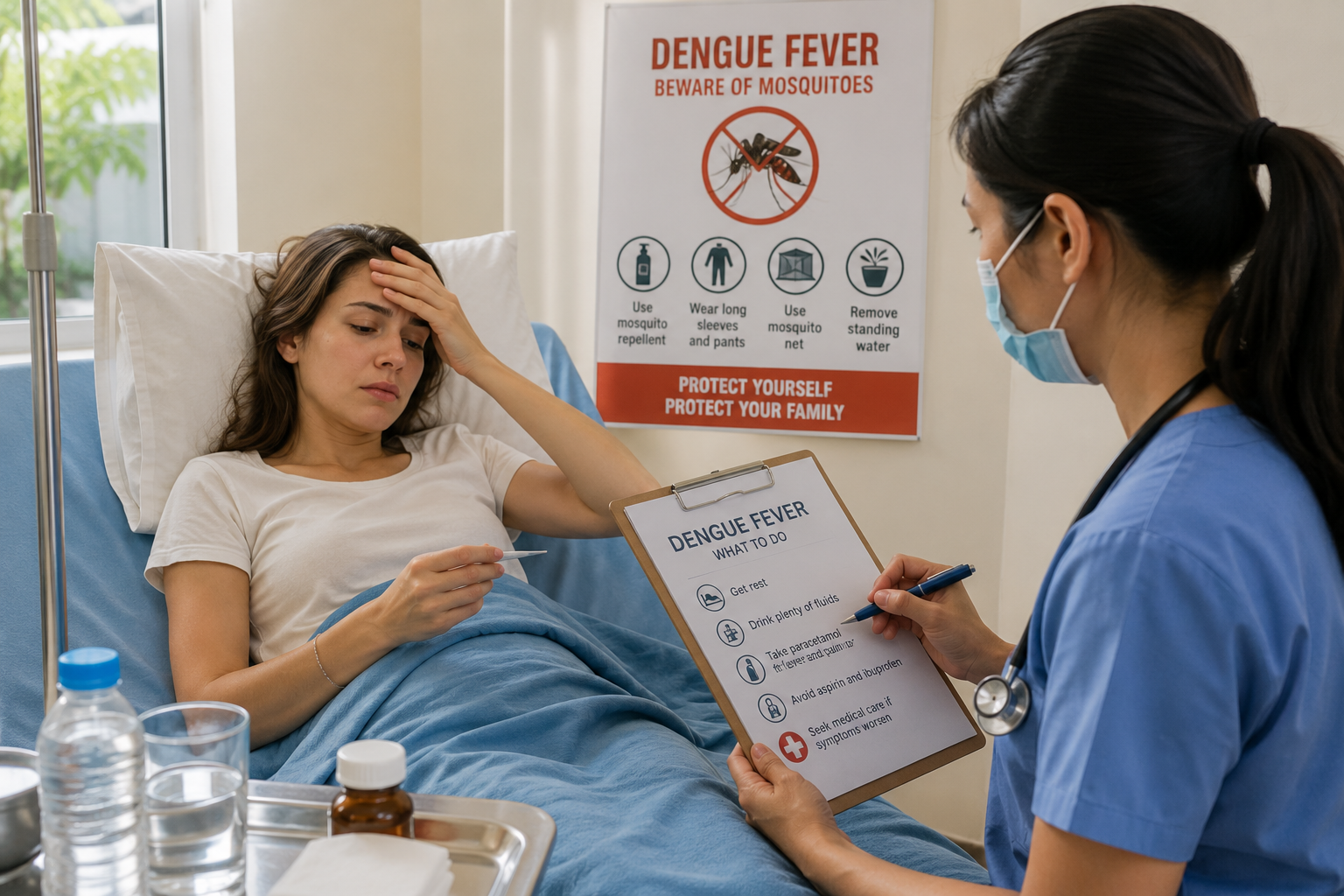
What Should Tourists Do If They Get Dengue Fever in Vietnam?
Dengue is a viral infection transmitted by mosquitoes and is common in many tropical countries, including Vietnam. While there is no need to panic, every traveler should be familiar with its symptoms and know where to seek medical attention if their condition worsens.
This article is intended for informational purposes only and does not constitute medical advice. It explains what you should know about dengue and how to obtain medical assistance quickly if needed.
What Is Dengue and Why Is It Relevant in Vietnam?
Dengue is transmitted through the bite of an infected Aedes mosquito, which is most active during daylight hours, particularly around sunrise and before sunset.
The disease is widespread across tropical and subtropical regions, and Vietnam is one of the countries where the virus circulates regularly.
Seasonal Risk
Dengue cases generally increase during warm and rainy months, which is typical for tropical climates.
Current epidemiological information for specific regions of Vietnam is published by the Vietnamese Ministry of Health. If you are traveling during the rainy season, it is advisable to check the latest local health updates before your trip.
Symptoms to Watch For
According to the World Health Organization (WHO), many people infected with dengue experience no symptoms at all.
Among those who do develop symptoms, the most common include:
Symptoms usually appear several days after the mosquito bite and, in most cases, resolve within one to two weeks without complications.
These symptoms are general WHO guidance rather than diagnostic criteria. Many viral illnesses present in a similar way, so experiencing these symptoms does not necessarily mean you have dengue. Only a healthcare professional can establish a diagnosis after a clinical examination and, when appropriate, laboratory testing.
When to Seek Immediate Medical Attention
Some cases of dengue may progress to severe disease and require hospitalization.
Seek emergency medical care immediately—rather than waiting until the next day—if you experience any of the following:
If you or someone close to you develops any of these warning signs, seek hospital care immediately rather than waiting for the symptoms to resolve on their own.
Where to Get Medical Care
Major tourist destinations throughout Vietnam have hospitals and clinics with English- and Russian-speaking medical staff who can assist patients with suspected dengue or other acute illnesses.
Medical services are available in:
If you experience any of the emergency warning signs listed above, call Vietnam's emergency medical service (115) or go directly to the nearest hospital. In serious cases, every hour can matter.
How VietMed Can Help
If your condition is not critical but you would like to see a doctor, VietMed's concierge service can help you quickly find a suitable clinic in your city, communicate in your preferred language, and arrange a medical appointment.
We do not diagnose medical conditions or interpret symptoms. Diagnosis and treatment are provided exclusively by licensed physicians during an in-person consultation. Our role is to help you access medical care as quickly and conveniently as possible.
Prevention: How to Reduce Your Risk of Mosquito Bites
Frequently Asked Questions
Can I Get Dengue More Than Once?
Yes. It is possible to become infected again with a different dengue virus serotype. According to medical literature, a secondary infection may be more severe than the first, making it important not to ignore symptoms even if you have previously had dengue.
Is There a Specific Treatment for Dengue?
There is currently no specific antiviral treatment for dengue.
Management is supportive and may include:
Treatment should always be supervised by a healthcare professional.
Do not self-medicate. In particular, avoid taking aspirin or ibuprofen unless specifically recommended by a physician, as these medications may increase the risk of bleeding in patients with dengue.
Should I Get Vaccinated Against Dengue Before Traveling to Vietnam?
The decision to receive a dengue vaccine should be discussed with a healthcare professional or travel medicine specialist before your trip.
Vaccination recommendations are made on an individual basis after considering your medical history and other relevant factors.
ℹ️ The information provided in this article is for general informational purposes only and is based on publicly available sources, including materials published by the World Health Organization.
VietMed is a medical navigation and concierge service. We are not a healthcare provider, do not diagnose medical conditions, and do not provide medical treatment or medical advice.
If you develop symptoms or your condition worsens, seek medical attention immediately. We can assist you in arranging a medical appointment through our concierge service.
Dengue is a viral infection transmitted by mosquitoes and is common in many tropical countries, including Vietnam. While there is no need to panic, every traveler should be familiar with its symptoms and know where to seek medical attention if their condition worsens.
This article is intended for informational purposes only and does not constitute medical advice. It explains what you should know about dengue and how to obtain medical assistance quickly if needed.
What Is Dengue and Why Is It Relevant in Vietnam?
Dengue is transmitted through the bite of an infected Aedes mosquito, which is most active during daylight hours, particularly around sunrise and before sunset.
The disease is widespread across tropical and subtropical regions, and Vietnam is one of the countries where the virus circulates regularly.
Seasonal Risk
Dengue cases generally increase during warm and rainy months, which is typical for tropical climates.
Current epidemiological information for specific regions of Vietnam is published by the Vietnamese Ministry of Health. If you are traveling during the rainy season, it is advisable to check the latest local health updates before your trip.
Symptoms to Watch For
According to the World Health Organization (WHO), many people infected with dengue experience no symptoms at all.
Among those who do develop symptoms, the most common include:
- High fever
- Severe headache
- Pain behind the eyes
- Muscle and joint pain
- Nausea
- Skin rash
Symptoms usually appear several days after the mosquito bite and, in most cases, resolve within one to two weeks without complications.
These symptoms are general WHO guidance rather than diagnostic criteria. Many viral illnesses present in a similar way, so experiencing these symptoms does not necessarily mean you have dengue. Only a healthcare professional can establish a diagnosis after a clinical examination and, when appropriate, laboratory testing.
When to Seek Immediate Medical Attention
Some cases of dengue may progress to severe disease and require hospitalization.
Seek emergency medical care immediately—rather than waiting until the next day—if you experience any of the following:
- Severe abdominal pain
- Persistent or repeated vomiting
- Bleeding gums or nosebleeds
- Blood in vomit or stool
- Extreme weakness, restlessness, or confusion
- Worsening condition after the fever has already subsided
If you or someone close to you develops any of these warning signs, seek hospital care immediately rather than waiting for the symptoms to resolve on their own.
Where to Get Medical Care
Major tourist destinations throughout Vietnam have hospitals and clinics with English- and Russian-speaking medical staff who can assist patients with suspected dengue or other acute illnesses.
Medical services are available in:
- Nha Trang
- Ho Chi Minh City
- Hanoi
- Da Nang
If you experience any of the emergency warning signs listed above, call Vietnam's emergency medical service (115) or go directly to the nearest hospital. In serious cases, every hour can matter.
How VietMed Can Help
If your condition is not critical but you would like to see a doctor, VietMed's concierge service can help you quickly find a suitable clinic in your city, communicate in your preferred language, and arrange a medical appointment.
We do not diagnose medical conditions or interpret symptoms. Diagnosis and treatment are provided exclusively by licensed physicians during an in-person consultation. Our role is to help you access medical care as quickly and conveniently as possible.
Prevention: How to Reduce Your Risk of Mosquito Bites
- Use insect repellents containing DEET or icaridin (picaridin), especially around sunrise and before sunset.
- Wear light-colored clothing that covers as much skin as possible in areas with high mosquito activity.
- Stay in accommodations with air conditioning or mosquito screens.
- Eliminate standing water nearby (such as in flower pots or buckets), as these are common mosquito breeding sites.
Frequently Asked Questions
Can I Get Dengue More Than Once?
Yes. It is possible to become infected again with a different dengue virus serotype. According to medical literature, a secondary infection may be more severe than the first, making it important not to ignore symptoms even if you have previously had dengue.
Is There a Specific Treatment for Dengue?
There is currently no specific antiviral treatment for dengue.
Management is supportive and may include:
- Fever control with paracetamol (acetaminophen)
- Adequate fluid replacement
Treatment should always be supervised by a healthcare professional.
Do not self-medicate. In particular, avoid taking aspirin or ibuprofen unless specifically recommended by a physician, as these medications may increase the risk of bleeding in patients with dengue.
Should I Get Vaccinated Against Dengue Before Traveling to Vietnam?
The decision to receive a dengue vaccine should be discussed with a healthcare professional or travel medicine specialist before your trip.
Vaccination recommendations are made on an individual basis after considering your medical history and other relevant factors.
ℹ️ The information provided in this article is for general informational purposes only and is based on publicly available sources, including materials published by the World Health Organization.
VietMed is a medical navigation and concierge service. We are not a healthcare provider, do not diagnose medical conditions, and do not provide medical treatment or medical advice.
If you develop symptoms or your condition worsens, seek medical attention immediately. We can assist you in arranging a medical appointment through our concierge service.